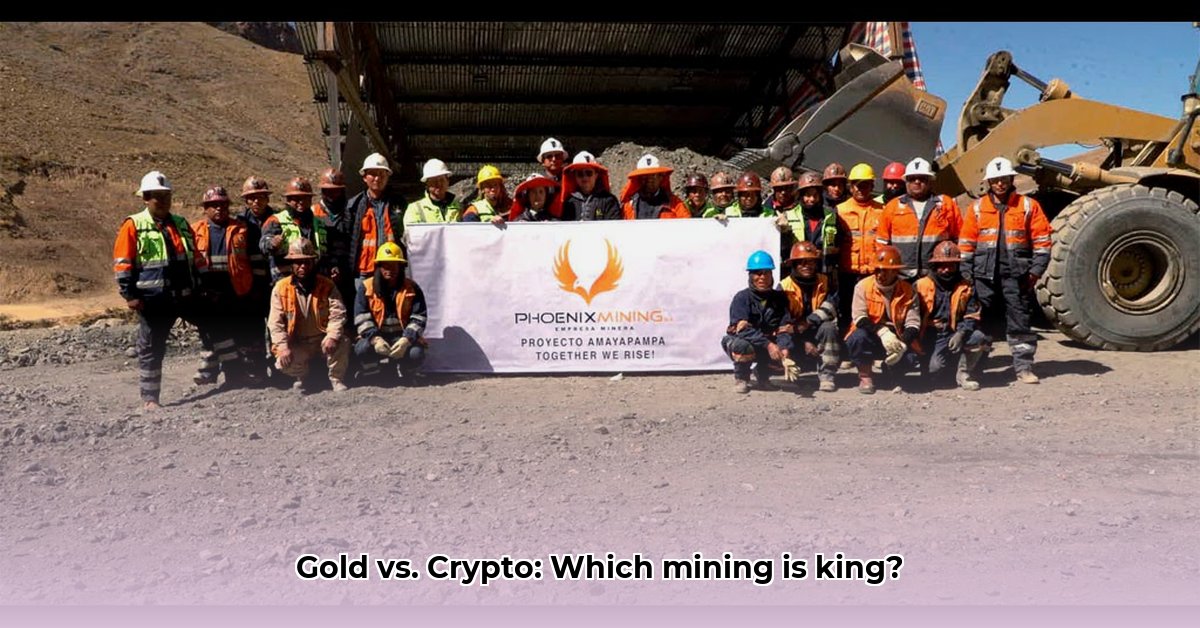
This comparative review analyzes two distinct mining operations: traditional gold mining at Amayapampa, Bolivia, and Ethereum cryptocurrency mining using PhoenixMiner software. We examine their operational models, economic realities, environmental impact, regulatory landscapes, and inherent risks to provide a balanced perspective on these contrasting industries. For more on crypto investment, see crypto investment trends.
Operational Models: A Tale of Two Mines
Amayapampa's gold mining operation employs traditional methods: excavation, ore processing, and metal extraction, requiring substantial upfront investment in heavy machinery and a skilled workforce. This labor-intensive process is geographically constrained by ore deposits and relies heavily on physical extraction techniques.
In contrast, Ethereum mining with PhoenixMiner uses high-performance computers (HPCs) to solve complex cryptographic puzzles. This process is decentralized, requiring primarily computational power and electricity, and it’s geographically flexible, limited only by access to affordable electricity and internet connectivity. The operational models highlight a fundamental difference: traditional resource extraction versus computational power.
Economic Considerations: Profitability and ROI
Amayapampa's profitability depends on fluctuating gold prices, extraction costs (labor, equipment, and processing), and ore grade. While gold prices exhibit relative stability in the long term, short-term variations affect profitability. Efficient extraction and cost management are crucial for success.
Ethereum mining's profitability is highly volatile, influenced by the Ethereum price, electricity costs, mining difficulty (which increases over time as more miners join), and the hardware's efficiency. High energy costs can significantly impact profitability, and the cryptocurrency market's inherent volatility introduces substantial risk. This underscores the contrasting economic stability of traditional and digital mining.
Environmental Impact: A Question of Sustainability
Amayapampa gold mining, like many traditional mining operations, carries significant environmental consequences, including water usage, waste generation (often containing toxic substances), habitat destruction, and carbon emissions from energy consumption. Stringent environmental regulations aim to mitigate these effects, but the environmental footprint remains substantial. The location and method of extraction significantly impact this footprint.
Ethereum mining's environmental impact is primarily determined by its energy consumption. While the mining process itself is relatively clean, the energy source significantly affects its carbon footprint. If powered by renewable energy sources, its impact is reduced; however, reliance on fossil fuels significantly increases its carbon footprint. This makes sustainability a key concern.
Regulatory Landscapes: Navigating the Legal Minefield
Amayapampa's operations are subject to established Bolivian mining laws, environmental regulations, and international agreements. This regulatory framework, while potentially complex, offers a relatively stable and predictable legal landscape.
Conversely, the regulatory environment for cryptocurrency mining is dynamic and fragmented. National and regional regulations vary widely, constantly evolving as governments grapple with this rapidly expanding technology. This regulatory uncertainty presents significant risks for miners.
Risk Assessment: Weighing the Odds
The risks associated with each operation differ significantly:
| Risk Factor | Amayapampa Gold Mine | PhoenixMiner Ethereum Mining |
|---|---|---|
| Price Volatility | Low (relatively stable gold prices) | Extremely High (volatile crypto market) |
| Regulatory Uncertainty | Moderate (established, but complex) | High (constantly evolving regulations) |
| Technological Risk | Moderate (machinery maintenance, ore grade variability) | High (hardware obsolescence, algorithm changes, network attacks) |
| Environmental Risk | High (water usage, waste generation, habitat destruction) | Moderate to High (highly dependent on energy source and e-waste generation) |
| Operational Risk | Moderate (weather, equipment failures, labor disputes) | Moderate (hardware failures, software glitches, electricity outages) |
Conclusion: A Divergent Path to Riches
Both Amayapampa gold mining and Ethereum mining with PhoenixMiner offer distinct approaches to wealth generation—one rooted in centuries-old tradition, the other in cutting-edge technology. Each presents unique operational, economic, environmental, and regulatory challenges. The optimal choice depends on individual risk tolerance and specific investment goals. Both sectors present both significant opportunities and considerable risks in a rapidly evolving world. The future of both will be shaped by technological advancements, regulatory changes, and environmental considerations.